
Following Mickey
On shame, spectacle, and staying regulated when comparison gets loud.

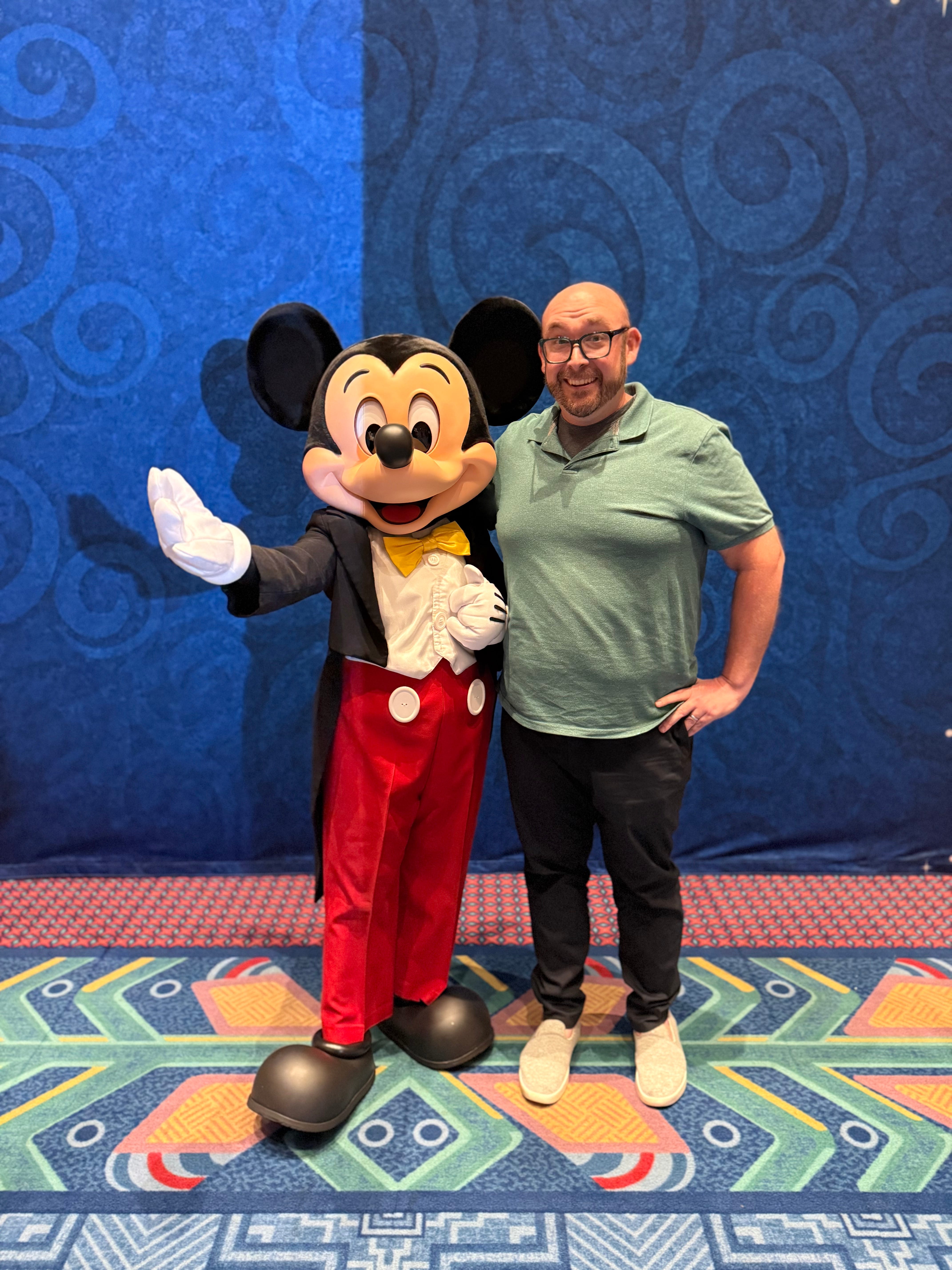
I recently got back form Disney World after speaking at the Clinically Ever After conference. My talk was scheduled on the last day of the program. I knew that I was going to be presenting right after lunch. That’s a tough spot to be put because people return with full b
ellies and heavy eyelids. But I am okay with it because I’ve been in that time slot a ton of times before. However, what I wasn’t expecting was that right before lunch, Mickey Mouse showed up to take personal pictures with every attendee. All of the sudden, my after lunch talk on shame, was playing clean-up for Mickey Mouse.
Like the actual Mickey.
DJ Rockin’ Ray was blasting music. The audience erupted in applause, their phones were in the air. And dopamine was surging. 100+ adults grinning like children. It was joyful and theatrical and perfectly on-brand for a Disney setting.
Then, we had to come back and I had to deliver a talk on shame. LOL.
If you’ve heard my Clinically Ever After talk, you know I frame shame through story. I use Disney characters as metaphors for protective adaptations. Ariel giving up her voice for love. Elsa isolating to contain her power. Quasimodo hiding in the tower to avoid humiliation. These characters aren’t broken — they’re protecting attachment. They;re organizing themselves around belonging.
That’s the core of the talk: shame is not a defect. It’s an adaptation. It emerges when attachment feels threatened. The nervous system prioritizes connection over integration and we will contort ourselves to preserve belonging.
Standing there, listening to cheers for Mickey, I could feel that framework move from slide deck to bloodstream. My body didn’t care that I’ve been on stages before. It didn’t care that I know this material deeply. It registered contrast. Spectacle. Evaluation. Energy.
And in that split second, my own adaptive parts stirred.
One part wanted to perform bigger — to match the energy, to be more animated, to compensate for the perceived deficit. Another part wanted to shrink slightly, to soften the edges, to avoid being measured against what just happened. The latter won out.
If I were mapping it clinically, I’d say I felt both overcompensation and contraction impulses flicker through. These are classic shame responses. Collapse or compensate.
That’s what I teach: shame rarely shows up as “I am ashamed.” It shows up as urgency, tightness, and comparison. The subtle sense that you are less than the moment requires.
And here I was, about to teach that very thing.
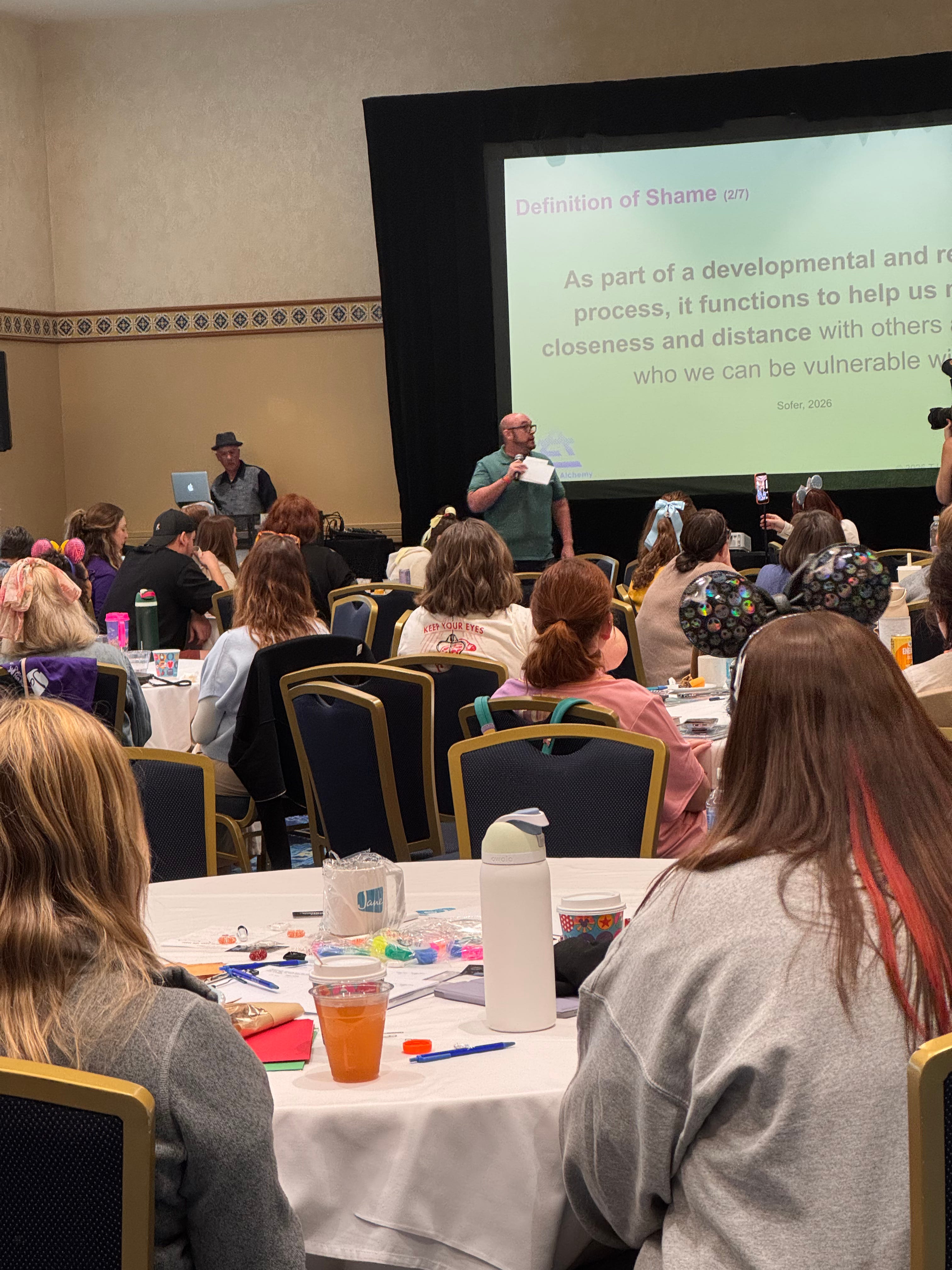
There’s a section in my talk where I explain that insight alone doesn’t resolve shame because shame doesn’t live only in language. It lives in the body. In sensation. In impulses that never got to complete. That’s why bottom-up regulation matters. Slowing the breath. Feeling the feet. Tracking sensation without immediately narrating it into a story.
I had to practice what I preach.
I could feel my heart rate up. My shoulders slightly elevated. The urge to “do something” about it — rehearse a joke, ramp up my intro, find a clever way to reference Mickey so the room would stay with me.
And at the very beginning, I did some of those things and I felt myself start to stumble. But, I also managed to do something quieter.
I felt my feet on the floor. I let my exhale lengthen and I allowed the activation to be there without interpreting it as incompetence.
That’s another key thread from the talk: imposter syndrome is not evidence of fraudulence. It’s evidence of attachment and protection. It activates when something meaningful is at stake.
The fact that I cared about following Mickey meant the room mattered to me.
When I finally walked onstage, I made a conscious decision not to compete with what had just happened. Spectacle had already done its job and my job was different. I needed to shift the nervous system of the room, not amplify it.
So I slowed the pace.
I spoke more deliberately. I invited reflection early. I moved from big external energy to internal noticing. And you could feel it happen. The room landed. The laughter and buzz gave way to pens moving across paper, heads tilted down in thought.
In the talk, I describe how shame loses power in regulated presence. Not in performance. Not in perfection. In presence.
And I believe that’s what happened.
Not because I overpowered the energy, but because I didn’t let my own activation dictate the tone. I didn’t collapse. I didn’t overcompensate. I stayed.
It struck me afterward how often we assume that public, visible people are immune to these dynamics. As if experience inoculates you against shame activation. It doesn’t. Visibility simply gives shame more opportunities to whisper.
“You’re not as big as that.”
“You’re not as exciting.”
“You don’t belong in this sequence.”
But shame theory teaches us that comparison is a relational cue, not a verdict. The nervous system scans for hierarchy constantly. The work is not to eliminate that scan. It’s to contextualize it.
Difference does not equal deficiency.
In my talk, I use the phrase “Naming. Holding. Transforming.” We name the adaptation. We hold it with compassion. And we transform it through new relational experiences.
Backstage, I named it: “This is activation. This is attachment at stake.”
Onstage, I held it: “It makes sense that my body is responding.”
And in real time, I transformed it by choosing steady over spectacle.
That’s the piece I’m proud of.
Not that I followed Mickey. That’s a fun anecdote.
But that the theory I teach wasn’t just intellectual. It was embodied.
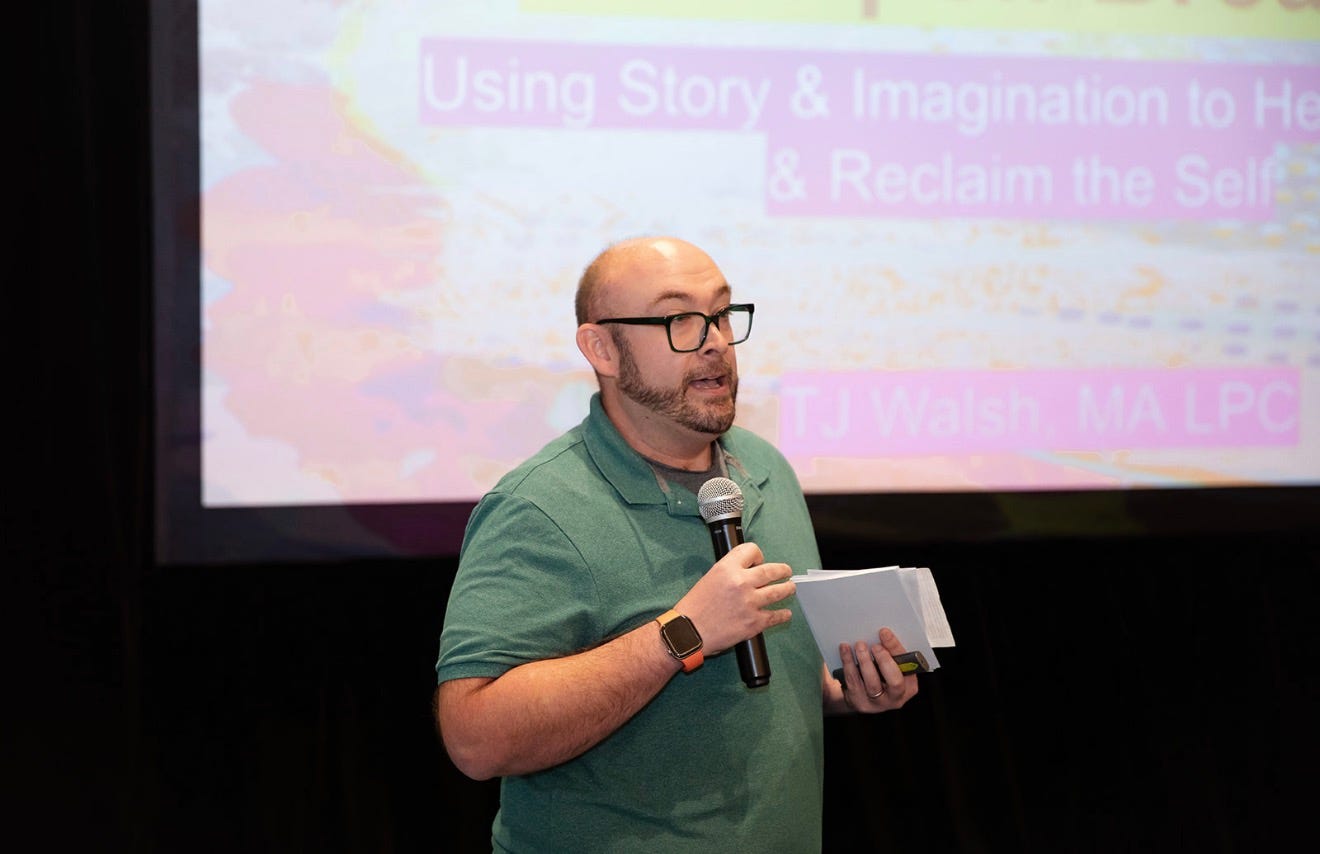
Shame says you have to be the loudest, the brightest, the most entertaining to earn your place.
Regulated leadership says you have to be grounded enough to invite depth.
At a conference built around fairy tales and magic, I ended up having my own small narrative arc. Not from obscurity to spectacle, but from activation to integration.
And honestly, that feels far more aligned with the work.
Would I choose to follow Mickey again? Maybe after my nervous system forgets the sequence.
But if the entire point of Clinically Ever After was to show that our protective adaptations soften when we stay present and connected, then this was the perfect field test.
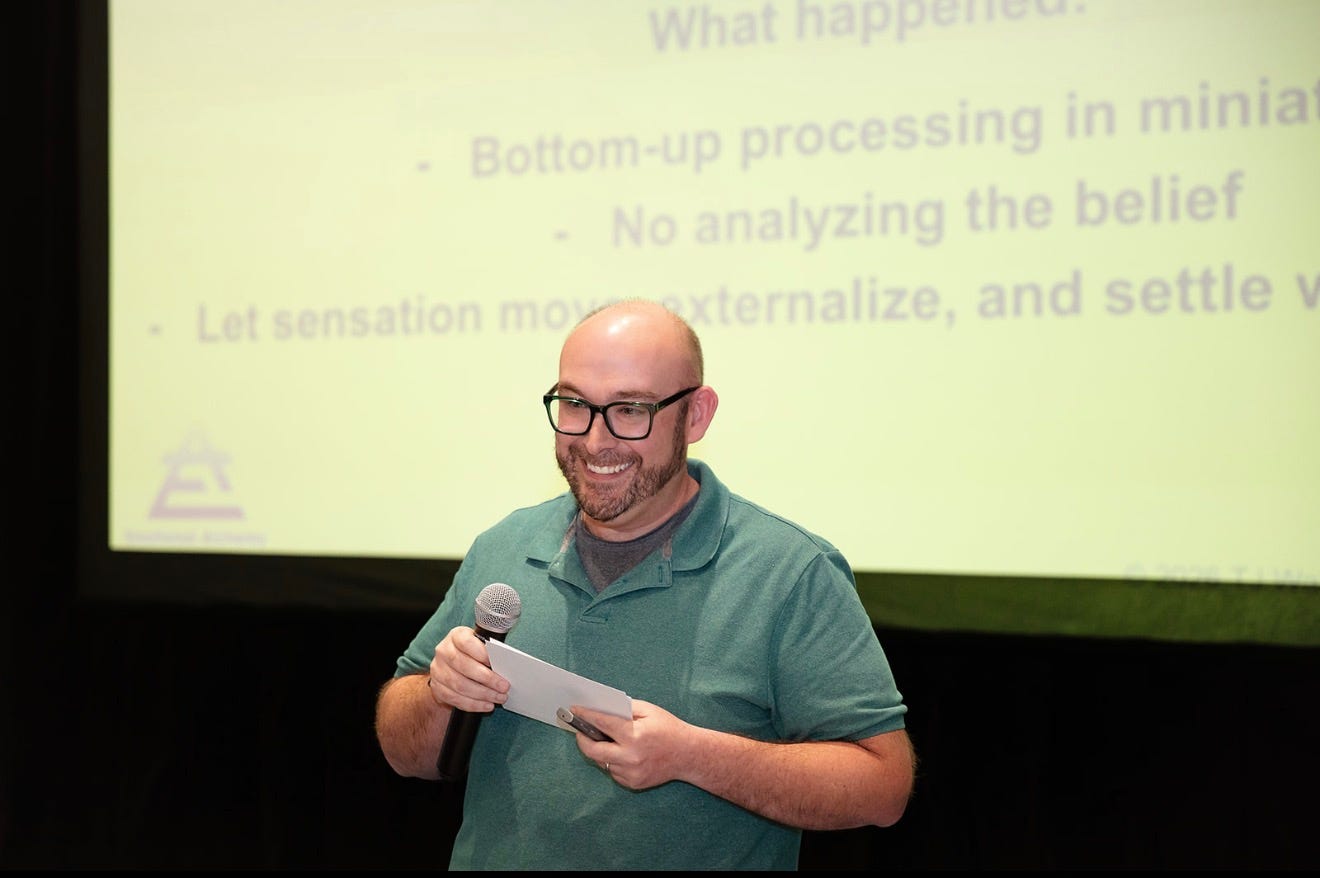
TJ Walsh is an artist, psychotherapist, professional counselor, and founder of the Emotional Alchemy Lab™, where creativity and psychology meet to help people stay human in the heat of it all. He writes about art, emotional leadership, and the messy work of becoming real.